Why You Need to Store Delicate Silk Dresses Safely?

Time:2026-09-30 Author:Mason
0%

A silk dress can look effortless, yet its fibers need thoughtful care between wears. Sunlight can fade a shoulder or skirt hem, while trapped moisture may leave marks or encourage mildew. Even a rough hanger can pull at delicate seams. Small storage choices matter.

How to store delicate silk dresses safely begins with checking the care label and making sure the garment is clean and fully dry. Perspiration, perfume, and food spots can become harder to remove over time, so ask a qualified cleaner about stains rather than scrubbing them at home. Use a smooth, padded hanger for sturdy dresses, or fold lighter pieces with clean, acid-free tissue to reduce creases. Keep silk in a cool, dry, dark place, ideally inside a breathable cotton garment cover. Avoid sealed plastic bags and crowded closets; both can limit airflow or cause fabric to press against sharp trims. Give it room.

The right method may vary with the dress’s weight, lining, and embellishments. A beaded bodice, for example, may be safer folded than suspended for months. There is no perfect rule for every silk garment. Checking it occasionally helps you notice dampness, dust, or pressure marks before they worsen. This guide explains the practical choices, common storage mistakes, and signs that professional care may be the wiser option. I still find that simple, consistent checks make the biggest difference.
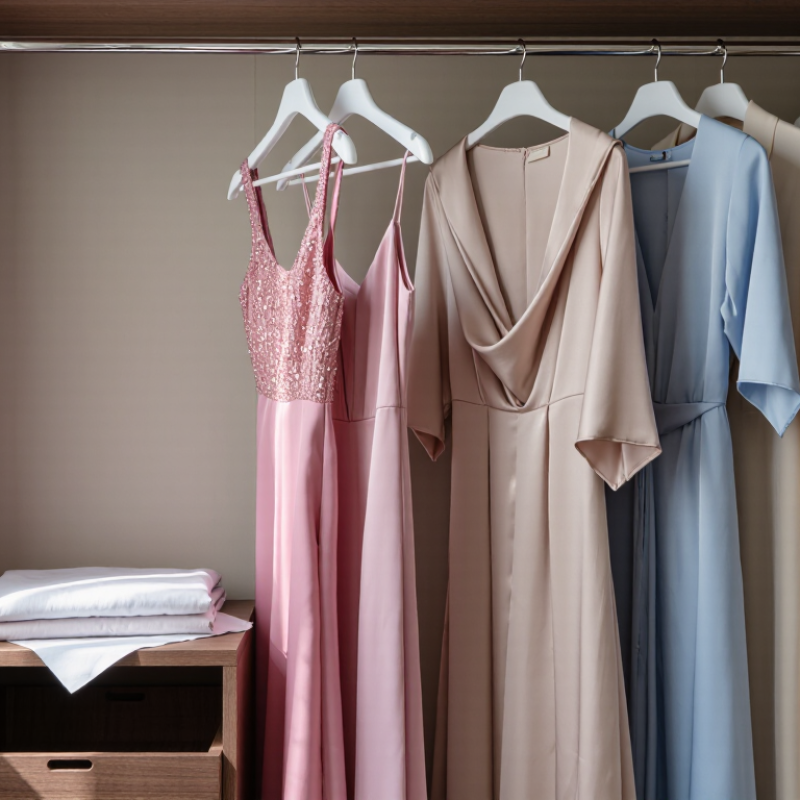
Why You Need to Store Delicate Silk Dresses Safely?

Silk’s 11% Standard Moisture Regain: Why Stable Humidity Matters

Why You Need to Store Delicate Silk Dresses Safely?

Silk’s 11% Standard Moisture Regain: Why Stable Humidity Matters

Silk is often assigned a standard moisture regain of about 11 percent. This figure describes moisture absorbed by the fiber under specific testing conditions, relative to its dry weight. It does not mean your closet should be kept at 11 percent humidity. That distinction is easy to miss. Silk naturally exchanges moisture with the surrounding air, so repeated shifts between damp and very dry conditions can affect how a dress feels and hangs.

Choose a clean, cool storage space with reasonably steady humidity. Avoid a steamy bathroom, a damp basement, or an attic that heats up in summer. A breathable garment cover helps limit dust while allowing air circulation; tightly sealed plastic can trap unwanted moisture.

Before storing a dress, make sure it is fully dry and free of food, perfume, and perspiration marks. Those tiny residues can become more troublesome over time. Not a perfect safeguard. Check the garment occasionally, especially after a humid season, and look for musty odors or spots. A small room hygrometer can reveal swings you might not notice. Still, one reading cannot describe every corner of a closet, and silk garments vary. Store with care, then adjust if the fabric begins to feel damp, stiff, or unusually dry.

Maintain 45–55% RH: Museum Guidance for Textile Storage

Silk is a protein-based fiber that responds to moisture in its surroundings. In a damp wardrobe, a silk dress can develop musty odors or mold, especially when packed tightly with little airflow. Repeated humidity changes may also stress fibers, seams, and pleats. Small shifts matter.

The National Park Service’s Museum Handbook, Part I, Chapter 4, gives 45–55% relative humidity as a suitable target range for many museum collections. Keep delicate dresses within that band, aiming for steady conditions rather than a single perfect reading. Place a digital hygrometer near the garment, away from windows, radiators, and exterior walls. Check it regularly; a closet can differ from the room reading. The range helps guide storage, but it cannot prevent damage from light, dust, pests, or poor handling.

Tips: Use a clean, breathable garment cover and leave space around the dress. Avoid damp basements and uninsulated attics. If readings stay above 55%, improve airflow or use a dehumidifier nearby, not inside the storage container. Check for changes. A number alone is not a guarantee.

Limit Light to 50 Lux: Conservation Guidance for Light-Sensitive Textiles

Why You Need to Store Delicate Silk Dresses Safely?

Limit Light to 50 Lux: Conservation Guidance for Light-Sensitive Textiles

Silk can lose color and strength with repeated light exposure. For a delicate dress, keep illumination at or below 50 lux when it must be displayed. Measure at the fabric, not across the room. A handheld lux meter is more reliable than a phone app, though readings can still vary by position.

Light fades color. Exposure adds up over time, even when each viewing seems brief. Keep the dress in a closed, dark cupboard between occasions, and use a cover or lined storage box to block stray light. UV-filtering film can reduce ultraviolet exposure, but visible light can still damage dyes. Small changes help.

If the dress is shown, use a timer and switch the lights off when nobody is present. Avoid placing it near a sunny window; curtains do not always block enough light. Keep the fabric away from hot lamps, too. A 50-lux limit is a practical guide, not a guarantee: some dyes fade faster than others. I would rather check the actual fabric than assume a dim-looking room is safe.

Why Store Delicate Silk Dresses Safely?

Silk is light-sensitive, and exposure can cause fading over time. Conservation guidance commonly recommends keeping highly light-sensitive textiles at or below 50 lux. The other bars show representative indoor lighting levels; actual levels vary by room and conditions.

Lux (lx) measures illuminance. Reference: Canadian Conservation Institute guidance for light-sensitive materials.

Choose Padded Hangers or Acid-Free Boxes to Support Silk Safely

A silk dress needs support, not just a place to hang. Choose a wide, padded hanger so its weight rests across the shoulders rather than pulling at thin straps. Cover the padding with clean, undyed cotton; dyed fabric may transfer color if damp. Avoid wire hangers, which can leave sharp creases and shoulder bumps. Check the dress after hanging it. A hanger can look safe while slowly stretching a weak seam.

For fragile, beaded, or heavy dresses, use a clean acid-free box and support the garment with acid-free tissue. Fold loosely, cushion the folds, and avoid stacking weight on top. Small details matter. The Canadian Conservation Institute’s guidance recommends limiting light on highly light-sensitive materials, including textiles, to about 50 lux, and keeping relative humidity stable near 50%. These are collection-care benchmarks, not a guarantee for every home. Store the box away from windows, radiators, and damp walls; inspect it occasionally for musty odors or new creases. I would not assume “acid-free” means moisture-proof. A dry, stable storage spot matters just as much.

Inspect Stored Dresses Every 6–12 Months for Pests and Fiber Damage

Inspect a silk dress every 6–12 months, even when it has been stored in a clean, sealed container. Look closely at seams, hems, underarms, and folded areas, where tiny holes or pale webbing can be easy to miss. Check for shed skins, gritty debris, and weakened threads. A bright lamp and a phone camera help reveal changes between inspections. UC Statewide IPM Program guidance reports that female webbing clothes moths can lay 40–50 eggs, so a small unnoticed problem may grow. Silk is not their preferred food, but perspiration or food residue can make a garment more attractive to pests.

Handle the dress gently, supporting its weight rather than lifting it by the shoulders. Record the date and photograph any suspicious mark; compare the images at the next check. The Canadian Conservation Institute’s guidance on preventing pest infestations emphasizes monitoring collections and responding early to signs of insect activity. If you find fresh webbing, larvae, or new holes, separate the dress from other textiles and seek advice from a textile conservator. A clean-looking dress is not proof that it is safe. I would not rely on scent or a quick glance; both can miss early fiber damage.

Why You Need to Store Delicate Silk Dresses Safely: Inspect Stored Dresses Every 6–12 Months for Pests and Fiber Damage
Inspection Area What to Check Why It Matters Recommended Action
Inspection schedule Check stored dresses every 6–12 months, and inspect sooner if the storage area is damp, warm, or has had pest activity. Regular checks can help catch early signs of insects, moisture, or fabric deterioration before damage spreads. Record the inspection date and any changes noticed. Use the shorter interval when storage conditions are less stable.
Insect activity Look for small holes, shed insect skins, webbing, larvae, or debris in folds, seams, and pockets. Clothes moth larvae can feed on animal-based fibers, including silk, particularly when garments carry food, perspiration, or other residues. Isolate a suspect garment and inspect nearby items. Clean garments appropriately before returning them to storage.
Fiber and surface condition Check for thinning, snags, fraying, weakened seams, discoloration, or changes in texture. Silk fibers and finishes can be affected by friction, prolonged pressure, light, and unsuitable storage conditions. Handle gently and avoid pulling at loose threads. Seek a qualified textile-care professional for significant damage.
Moisture and odor Notice musty smells, dampness, visible mold, or moisture marks on the garment or storage container. Excess moisture can encourage mold growth and weaken or stain delicate textiles. Move the garment to a clean, dry environment. Do not seal a damp dress in an airtight container.
Light exposure Check whether the garment is exposed to direct sunlight or strong indoor light. Extended light exposure can fade dyes and contribute to fiber deterioration. Store the dress away from windows and bright light, using a breathable, light-blocking cover.
Hangers and folds Look for shoulder bumps, stretched straps, sharp creases, or stress along folded areas. Silk can be delicate, and prolonged hanging or pressure at fold lines may distort or strain the fabric. Use a padded hanger only when the dress can hang without strain; otherwise, store it flat with smooth, clean support.
Storage materials Check that the cover and storage area are clean, dry, and free of rough surfaces or acidic paper. Clean, suitable materials help reduce abrasion, dust, and unwanted contact with the fabric. Use a clean breathable garment cover or acid-free tissue for supported folds. Avoid plastic bags for long-term storage.
After inspection Confirm the dress is clean and completely dry before putting it away again. Perspiration, food, and other residues can attract pests or become harder to remove over time. Follow the care label or consult a textile-care professional. Return the dress to a cool, dry, dark storage space.

FAQS

What does silk’s 11% moisture regain mean?

It describes moisture held by silk fibers under specific testing conditions. It does not mean your closet needs 11% humidity.

Where should I store a silk dress?

Choose a cool, clean space with steady humidity. Avoid steamy bathrooms, damp basements, and hot attics.

Should I use a plastic garment bag?

A breathable cover usually works better. Tight plastic can trap moisture and create unpleasant odors.

What should I do before storing the dress?

Make sure it is completely dry. Remove food, perfume, and perspiration marks first.

How can I notice hidden humidity changes?

Place a small room hygrometer near the garment. One reading is not enough, because closet corners can differ.

How often should I inspect a stored silk dress?

Check it every six to twelve months. Inspect seams, hems, underarms, and folded areas carefully.

What signs may indicate pests or fiber damage?

Look for tiny holes, pale webbing, shed skins, gritty debris, or weakened threads. A bright lamp helps.

What should I do after finding fresh webbing or new holes?

Separate the dress from other textiles. Seek advice from a qualified textile conservator, and photograph the damage.

How should I handle a stored silk dress?

Support its full weight instead of lifting it by the shoulders. Record inspection dates and compare photographs later.

Is careful storage a complete guarantee?

No safeguard is perfect. Silk garments vary, so adjust storage if the fabric feels damp, stiff, or unusually dry.

Conclusion

How to store delicate silk dresses safely starts with controlling the conditions around the fabric. Silk has a standard moisture regain of about 11%, so it naturally absorbs and releases moisture; keeping humidity stable helps reduce the risk of brittleness, mildew, and other damage. Aim for 45–55% relative humidity, and keep dresses away from direct sunlight and strong indoor lighting. Limiting exposure to around 50 lux helps protect silk’s delicate fibers and colors from fading.

Support each dress with a padded hanger that won’t strain the shoulders, or place it in an acid-free box with soft, breathable protection. Avoid crushing or tightly folding the fabric. Every 6–12 months, inspect stored dresses for signs of pests, discoloration, weakened seams, or fiber damage. These simple precautions help preserve the garment’s shape, texture, and appearance over time.

Mason

Mason

Mason is a seasoned marketing professional with a deep expertise in the company's offerings and a passion for driving brand awareness. With a strong background in digital marketing strategies, he has an innate ability to connect with diverse audiences and effectively communicate product benefits.......