Why Is My Closet Always Messy Despite Organizing? The question often comes up after a weekend spent sorting hangers, folding shirts, and clearing the floor. For a few days, everything looks calm. Then laundry piles up, shoes drift out of place, and the same crowded shelf becomes hard to use again. It can feel like organizing failed. Sometimes, the system simply asks more effort than daily life allows.
Professional organizer and author Marie Kondo offers a useful guiding principle: “The question of what you want to own is actually the question of how you want to live your life,” she writes in The Life-Changing Magic of Tidying Up. Applied to a closet, that idea means looking beyond matching bins. Do your clothes fit your current routine? Can you put them away without moving three other things? Are rarely worn items taking the easiest space? Small frictions matter. A beautiful system can still be impractical.
This guide explores why clutter returns, from limited storage and changing habits to unrealistic organizing plans. It also looks at practical ways to make a closet easier to maintain, such as giving everyday items reachable homes and leaving room for laundry. There is no perfect closet. And no single container fixes everything. A more honest goal is a setup that works on a tired Tuesday, not just on cleaning day. Some trial and error is normal; noticing what keeps slipping out of place may be more useful than buying another organizer.
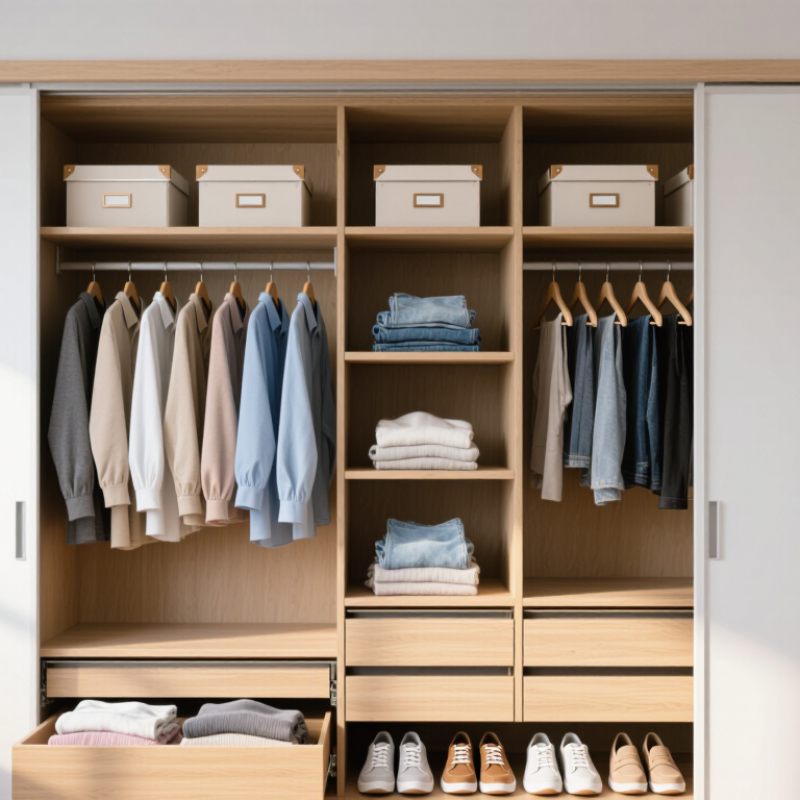
What Repeated Closet Clutter Reveals About the Current System
A closet that becomes messy again may not need another big cleanout. It may be showing that the current setup does not match your daily habits. If clean shirts pile up on a chair, for example, the hanging space might be inconvenient or already full. If shoes gather by the door, their assigned shelf may be too far away. Repeated clutter is useful evidence. Notice what lands where, and when.
Tips: Track one week of clothing habits. Keep often-worn items at eye level, and place a laundry basket where clothes usually come off. Leave a little empty space on shelves; tightly packed stacks are harder to maintain. Try one small change before buying storage items.
I once assumed labeled boxes would solve everything. They looked tidy, but I rarely put things back into them after a rushed morning. That was my mistake. A system should be easy to use when you are tired, not just attractive after organizing. Still, routines change, and a setup that worked last season may no longer fit. Check the recurring trouble spots before reorganizing the whole closet.
A closet can look organized and still be over capacity. Hangers face one way, folded shirts sit in neat stacks, yet adding one more sweater makes the door catch. The problem may be volume, not effort: clothing takes up space even when it is rarely worn.
The U.S. Environmental Protection Agency reported that Americans generated 17 million tons of textiles in 2018; about 11.3 million tons went to landfills. That figure covers all textiles, not closets alone, but it shows how much material can accumulate beyond useful storage.
Space is finite.
Storage works only when clothing volume fits the available shelves, drawers, and hanging rail. A practical check: pull out one category, such as jeans, and compare its actual footprint with the space assigned to it. If stacks lean or hangers press together, the category may exceed capacity. I used to treat that as a folding problem. Sometimes it is; often, it is simply too much clothing for the space.
WRAP’s Valuing Our Clothes report found that extending a garment’s active use by nine months could cut its carbon, water, and waste footprints by around 20–30%. It does not prescribe a closet size, and there is no universal ideal ratio. But keeping useful pieces in rotation, rather than crowded in a pile, can make limited storage easier to manage.
Why Is My Closet Always Messy Despite Organizing?
Which Daily Habits Disrupt an Organized Closet
A closet often gets messy through small, repeated habits rather than one dramatic change. Dropping a sweater over a chair “for later” can start a pile. So can leaving clean laundry in its basket for three days. These shortcuts feel harmless after a long day. But they make it harder to see what is actually clean, wearable, or missing.
Returning clothes to the wrong shelf is another quiet disruptor. A T-shirt pushed into a drawer meant for workout gear may seem convenient, but repeated mix-ups blur the closet’s layout. Hangers also matter. If one shirt is draped over a chair because its hanger is missing, that chair can become a temporary wardrobe. Temporary has a way of sticking around.
Try noticing what happens during the busiest part of your day. Do shoes land by the door? Do worn jeans go back into the closet without airing? A small landing spot for clothes worn once can prevent them from joining clean laundry. I still catch myself setting things down instead of putting them away. It saves a minute, maybe, but creates another task tomorrow.
A closet can look tidy after a weekend of sorting and still become messy by Tuesday. Often, the problem is not too few bins; it is that storage zones do not match how clothes are used. Daily items need the easiest reach, while occasional pieces can sit higher or farther back. A shelf that looks neat but requires moving three sweaters is not practical. That matters.
Place work clothes, uniforms, or other frequent outfits near eye level, grouped by type or by complete outfit. Keep socks, underwear, and accessories in shallow drawers or small open containers, where they are easy to return. Put laundry bags close to where clothes come off, not in a distant corner. For example, a basket beside the closet entrance may catch clothes that would otherwise land on a chair. Small details make a difference.
Seasonal coats and special-occasion clothing can go on upper shelves, provided they are clean and protected from dust. Leave a little breathing room between hangers; tightly packed garments are harder to remove without disturbing the rest. Try each zone for a week before buying more storage. Some systems fail in real life. If folded jeans keep toppling, a drawer may suit them better than a tall stack. Notice what gets dropped, misplaced, or worn repeatedly, then adjust that spot rather than reorganizing the whole closet again.
A closet can look organized on Sunday and feel chaotic by Thursday. Systems stop working when daily habits change, shelves become overfilled, or “temporary” piles never leave. A regular review catches these small failures before hangers jam and shoes migrate across the floor. Try ten minutes each month. Check whether frequently worn clothes are easy to reach, whether empty hangers have a home, and whether storage still fits what you actually use. Seasonal reviews help too, but don’t assume every item needs a perfect category.
Evidence supports taking home clutter seriously, while not promising that closet reviews solve stress. A UCLA-led study of 32 families found that women describing their homes as cluttered or unfinished showed cortisol patterns associated with greater stress and depressed mood. The researchers studied whole homes, not closet routines, so the findings do not prove that a monthly review improves well-being. Still, they suggest that the spaces we live in deserve attention. That matters. During a review, notice the shelf you keep avoiding, then change one practical thing: move daily clothes to eye level, measure a shelf before buying bins, or remove items that block access. I sometimes want to reorganize everything at once; that usually creates another pile. A smaller review is less impressive, but easier to repeat.
Source: Saxbe and Repetti, “No Place Like Home,” Personality and Social Psychology Bulletin, 2010.
The setup may not match your daily habits. Notice where clothes land and when. A chair full of clean shirts may mean hanging space is inconvenient.
It can show which storage spots are hard to use. Shoes gathering by the door may need a closer shelf. The mess is a clue.
Keep frequently worn clothes near eye level. Put a laundry basket where you usually change. Leave some shelf space empty; tight stacks often topple.
Try one small change first. Measure a shelf before buying bins, and check whether your current storage is easy to put things back into. I once bought boxes that looked neat but rarely got used.
Check one category, such as jeans. If stacks lean or hangers press tightly together, the clothes may exceed their assigned space. It may not be a folding problem.
A brief monthly check can reveal overfilled shelves and misplaced daily items. Seasonal reviews may help too. Ten minutes is enough to spot one trouble area.
Research on whole homes has linked perceived clutter with stress-related patterns, but it did not study closet reviews. A tidy closet is not a guaranteed mood fix.
Choose one practical adjustment, like moving daily clothes to an easy-to-reach rail. Avoid reorganizing everything at once. I still get tempted, and it often leaves another pile.
When asking, “Why is my closet always messy despite organizing,” it helps to look beyond how neatly items are arranged. Repeated clutter may signal that the system does not match the amount of clothing you own, the space available, or the way you get dressed each day. If storage is overfilled, frequently used pieces are hard to reach, or items lack clear places to return to, even a well-organized closet can quickly become chaotic.
A more functional setup starts by matching storage zones to clothing use: keep everyday items easy to access and less-used pieces in areas that do not compete for space. Small habits, such as returning clothes after wearing them and handling laundry consistently, also help preserve order. Regular reviews allow you to adjust the layout, reassess what you use, and restore balance as your needs change. Organization works best as an adaptable routine, not a one-time project.

URneat Furnish