What Is the weight limit for floating shelves? The answer depends on more than the shelf itself. A thick oak board may feel solid in your hands, yet still pull away from the wall if its brackets are poorly spaced or its screws miss the studs. The wall material matters, too. Drywall, masonry, and plaster each call for different anchors and installation methods.
Carpenter and woodworking educator Gary Katz is a relevant professional reference for installation fundamentals, but no verified quotation from him on floating-shelf weight limits was provided. Rather than inventing a quote, this guide focuses on the practical rule readers can check: the shelf, bracket, fasteners, wall, and installation must work as one system. A manufacturer’s stated capacity is useful only when the shelf is installed under the conditions specified.
A stack of dinner plates is not the same load as a light row of paperbacks. Weight also sits unevenly when objects crowd the front edge. Small details matter. This guide explains how to read load ratings, identify common weak points, and estimate a safer capacity for your setup in 2026. Treat any estimate with care; real walls can hide surprises, and a shelf that looks level today may loosen over time.
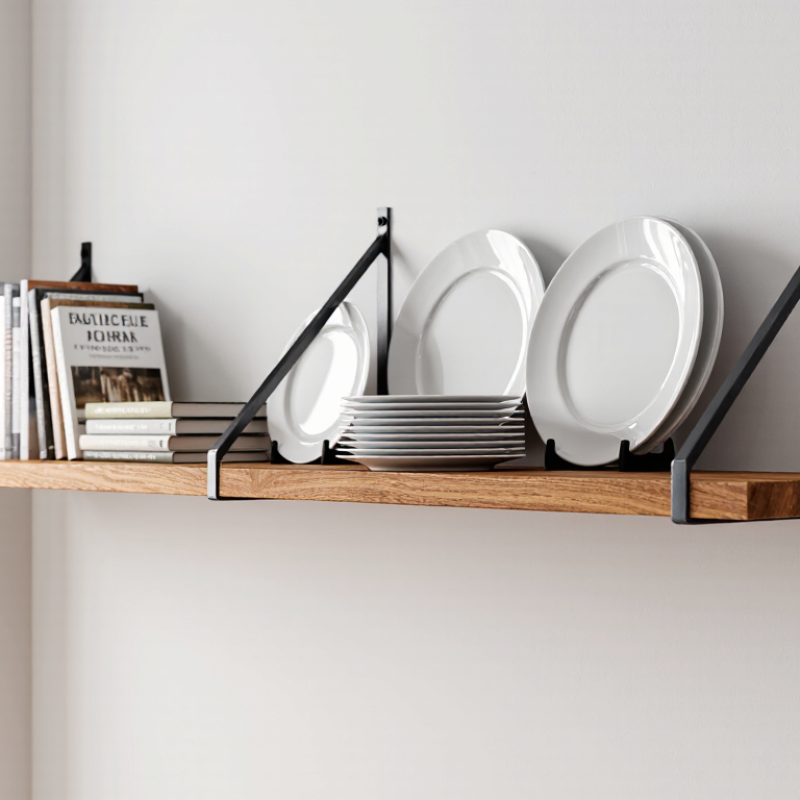
A floating shelf weight limit describes the load the shelf system can support under specified conditions. It is not simply the strength of the wooden board. The figure may depend on the shelf, its internal brackets, fasteners, and the wall material. A rating of 20 pounds, for example, usually refers to evenly distributed weight, not one heavy object pressing on a small area.
Read the installation details closely. Some limits assume the shelf is mounted into wall studs; others apply to masonry or particular anchors. If a shelf is attached to drywall with unsuitable fasteners, its real capacity may be far lower. The weakest connection often sets the limit. That part is easy to overlook.
Weight placement matters, too. A stack of books near the front edge creates more leverage than the same weight spread close to the wall. Repeatedly lifting or bumping items can also strain the fixings over time. Use a bathroom scale to estimate a group of objects, then leave a margin below the stated rating. If the instructions do not explain the test setup, treat the number as a guide, not a guarantee. I would be cautious here; real walls are rarely as uniform as a product test surface.
| Measurement or factor | What it means | Example or useful figure | How to use it |
|---|---|---|---|
| Rated load capacity | The maximum load specified for a particular shelf and installation configuration. | A hypothetical rating of 50 lb (22.7 kg) applies only under the stated test and mounting conditions. | Check the shelf instructions. There is no single weight limit that applies to all floating shelves. |
| Contents load | The weight of the items placed on the shelf, separate from the shelf itself when the rating is for total supported load. | If a system is rated for 50 lb total and the shelf weighs 8 lb, the remaining allowance is 42 lb (19.1 kg), assuming the rating includes the shelf. | Confirm whether the published capacity includes the shelf’s own weight before calculating a contents limit. |
| Evenly distributed load | Weight spread across the shelf surface rather than concentrated in one spot. | Four 5 lb objects spaced along a shelf create a 20 lb total load (9.1 kg). | Many capacity ratings assume a distributed load. Follow the manufacturer’s stated loading method. |
| Point load | Weight concentrated in a small area, which can create greater local stress than the same weight spread out. | A single 20 lb object and four separated 5 lb objects have the same total weight, but do not necessarily load the shelf in the same way. | Avoid assuming a distributed-load rating also applies to a heavy object placed at one point. |
| Mounting and wall substrate | The strength of the brackets or mounting rod, fasteners, and the material they are attached to. | A stud, masonry wall, or hollow-wall installation can have different capacities; the fastener and installation details matter. | The complete installed system is limited by its weakest component. Use fasteners suited to the wall and instructions. |
| Shelf depth and leverage | A load farther from the wall creates more turning force on the mounting system. | For the same load, doubling the distance from the wall doubles the load’s moment about the wall, all else equal. | Do not transfer a capacity rating to a deeper shelf or different bracket arrangement unless the rating allows it. |
| Unit conversion | A conversion between pounds and kilograms for comparing specifications. | 1 lb = 0.4536 kg; 1 kg = 2.2046 lb. | Use the same units when comparing a stated capacity with the weight of the shelf and its contents. |
| Practical loading limit | The safe working load for the exact shelf, fasteners, wall, and installation—not just the shelf board alone. | Use the lowest applicable rating among the shelf, brackets or supports, fasteners, and wall attachment. | If the rating or installation conditions are unknown, do not treat an estimated number as a verified capacity. |
Weight limits vary by product and installation. The manufacturer’s stated capacity and loading conditions take precedence over these illustrative examples.
It depends on the shelf material, bracket design, fasteners, wall type, and installation quality. There is no universal limit.
Drywall alone offers little dependable support for heavy loads. Fasten brackets or the mounting rail into studs whenever possible.
Use a stud finder, then confirm the location with a small pilot hole. The first reading may be wrong.
Use anchors rated for the specific wall material and follow their instructions. Brick, mortar, concrete, and hollow blocks behave differently.
No. It may assume a specific wall material, fastener size, and installation method. Treat it as a guide for the complete installed system.
Weigh each item and add the weights together. Include objects someone may add later. Keep heavy books near the wall, not the front edge.
Add known weights in small steps. Pause between steps. Watch for sagging, loose fasteners, cracks, or unusual movement. Stop at the first sign of stress.
No. It cannot certify capacity. Stay below the lowest rating for any component and leave a generous margin. Never hang your body from the shelf.
Stop loading it and reassess the wall, brackets, and fasteners. A neat installation can still be weak. For unusually heavy loads, consult a qualified installer.
What is the weight limit for floating shelves? There is no single figure that applies to every shelf. A shelf’s safe load depends on its size and material, the strength of its brackets or concealed supports, how securely it is installed, and the condition and type of wall behind it. The stated capacity may refer to the shelf itself or to a particular mounting setup, so it should be treated as specific to those conditions rather than as a universal guarantee.
To estimate a safe load, check the shelf and mounting hardware guidance, identify the wall structure, and make sure fasteners are suited to it. Add items gradually and watch for sagging, movement, or loosening; stop if anything shifts. Distribute weight evenly, place heavier items closer to the supports, and avoid concentrating a heavy load near the front or at one end. When the wall or installation is uncertain, use a more conservative load.

 URneat Furnish