A crowded sweater drawer can turn a simple morning into a hunt through sagging piles. The solution is not always a bigger dresser. Better folds can use the space you already have, keep sleeves from spilling over, and make favorite knits easier to spot. This guide to How to fold sweaters to save drawer space introduces ten practical methods, from compact rectangles to upright folds that let you see each garment at a glance.
Marie Kondo, organizing consultant and author, puts the idea plainly: “The key is to store things standing up rather than laying them flat.” Her advice works especially well when folded sweaters fit snugly in a drawer or fabric bin. Start with a clean, dry sweater, smooth the shoulders, and avoid pressing thick yarn into a tight, hard bundle. Small details matter. A chunky wool pullover needs more room than a fine cotton knit, and a deep drawer may suit a different fold than a shallow one. These methods offer useful starting points, not a perfect formula. I still find that one awkward sleeve can undo a neat stack. Try a fold, close the drawer, then adjust what shifts. The best method is the one your sweaters can keep.
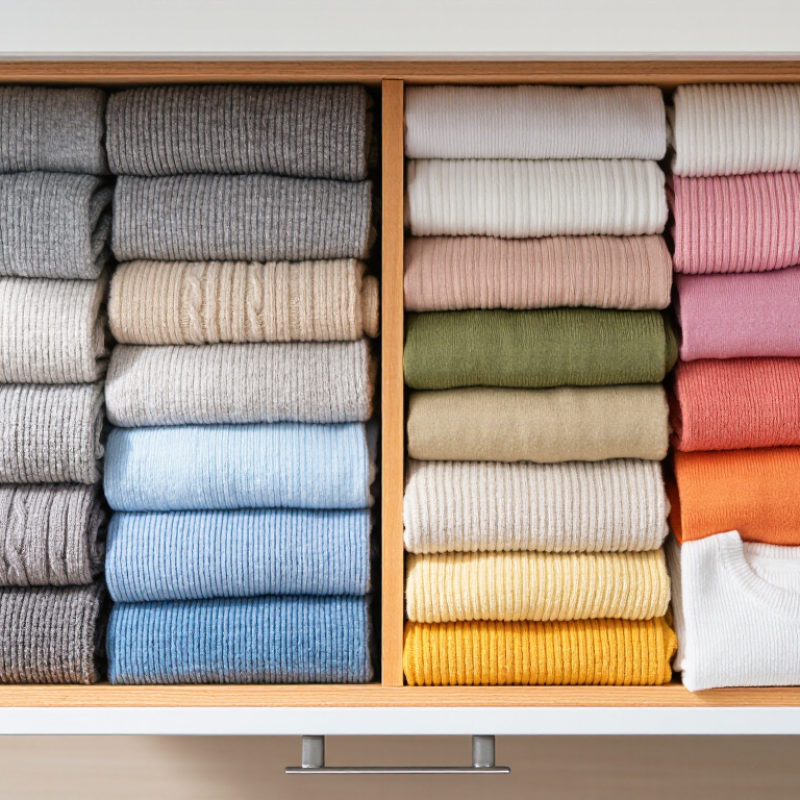
Before choosing a folding method, sort sweaters by thickness, knit structure, and how often you wear them. Chunky cable knits take more room and can become misshapen under heavy stacks. Fine-gauge sweaters fold more compactly, but delicate fibers may snag against zippers or rough drawer edges. Check care labels, then group similar weights together. Small differences matter.
Set a clear drawer goal. Measure its usable width and depth, and decide how many sweaters should fit without forcing the drawer shut. Leave a little breathing room; tight packing can crush bulky stitches and makes everyday pieces harder to reach. Try folding one sweater from each group, then place them upright or in short stacks and check what stays visible. A soft tape measure and a ruler can help compare folded widths. Not every fold fits every drawer. If a pile slumps or sleeves push against the sides, adjust the fold rather than pressing it flatter. The first arrangement may look tidy but still waste space. Recheck it after a week of normal use.
| # | Folding Method | Best-Suited Sweater Type | How to Fold | Drawer-Saving Goal | Practical Note |
|---|---|---|---|---|---|
| 1 | Flat Rectangle Fold | Lightweight, fine-knit pullovers | Lay the sweater flat, fold each sleeve across the body, then fold the body into a neat rectangle. | Keep every sweater within a consistent footprint so the drawer can be stacked evenly. | Use a smooth surface and avoid pulling the knit fabric out of shape. |
| 2 | File Fold | Thin to medium-weight sweaters that hold their shape | Fold the sides and sleeves inward, then fold the body into a compact rectangle that can stand upright. | Store sweaters in rows to see more items without lifting a whole stack. | Use dividers or snug rows to help upright folds stay in place. |
| 3 | KonMari-Style Compact Fold | Fine- and medium-gauge sweaters | Fold the sides and sleeves inward, fold the body into thirds, and adjust until the parcel can stand securely. | Create upright parcels of similar height for orderly, visible storage. | Do not compress delicate knits so tightly that creases become difficult to release. |
| 4 | Cardigan Button-and-Fold | Cardigans, especially fine or slippery knits | Fasten a few buttons to keep the front aligned, lay the cardigan face down, fold the sleeves inward, and fold the body into a rectangle. | Prevent loose fronts and sleeves from spreading into neighboring drawer space. | Leaving some buttons open can reduce strain on the button bands. |
| 5 | Bulky Sweater Wide Fold | Chunky cable-knit and thick wool sweaters | Fold each sleeve across the body and fold the sweater once or twice, using broad folds rather than a tight bundle. | Keep bulky items in a shallow, stable stack instead of making a narrow, high pile. | Place heavier sweaters near the bottom; avoid overfilling the drawer. |
| 6 | Turtleneck Collar-Tuck Fold | Turtlenecks and sweaters with tall collars | Fold the sleeves inward, fold the body into a rectangle, and tuck the collar gently inside the final fold. | Contain the collar within the sweater’s footprint rather than letting it occupy extra space. | Keep the collar loosely folded to avoid a sharp crease. |
| 7 | Oversized Sweater Cross-Fold | Oversized, long-body sweaters | Cross the sleeves over the body, fold the lower half upward, and fold again to make a manageable rectangle. | Reduce excess length so the sweater fits the drawer without bunching at the back. | Choose fold lines that do not place all the bulk at one edge. |
| 8 | Light Roll for Soft Knits | Soft, lightweight knits that are not prone to snagging | Fold the sleeves inward and roll the body loosely from the hem toward the neckline. | Use the drawer’s depth efficiently for a small number of soft, flexible items. | Keep the roll loose; tight rolling can create creases and is not suitable for every knit. |
| 9 | Two-Sweater Nested Fold | Two thin sweaters that are worn together or made from similar fabrics | Fold each sweater separately, then place one folded sweater inside the other’s final fold without forcing the layers together. | Keep a coordinated pair together while using one shared drawer footprint. | Use only when the combined thickness remains easy to lift and the drawer closes freely. |
| 10 | Drawer-Width File Fold | Medium-weight sweaters in a wide drawer | Fold the sweater into a rectangle sized to the drawer’s usable depth, then place it upright with its folded edge facing up. | Match fold size to the drawer so rows fit neatly with minimal unused gaps. | Measure the drawer interior first and leave enough room to retrieve sweaters without squeezing them. |
Planning tip: Sort sweaters by knit thickness before folding. Set a practical goal for each drawer—such as keeping items visible, maintaining one accessible layer, or leaving a small amount of free space so the drawer opens and closes easily. Folding reduces wasted space, but it does not reduce the actual fabric volume.
Lay the sweater flat and fold it once across the body. The broad shape helps avoid a tight, bulky bundle.
Make a long rectangle, then fold it into a compact packet. Stand it on its edge like a file.
Button a few middle buttons, then fold the sides inward. This can help keep the front panels aligned.
Lay the hood flat against the back before folding. Avoid stuffing it inside; that can create a bulky lump.
A loose roll can fit narrow drawers. Structured sweaters usually stack better when folded flat. It depends on the drawer.
Stand compact bundles on their edges so each color is visible. Put weekly favorites near the front.
Try two short rows instead of one tall pile. Keep heavier knits lower, and leave room at the sides.
Avoid overpacking, and group similar weights together. Check the rows occasionally and refold bundles that loosen. No fold is perfect.
Learn How to fold sweaters to save drawer space by matching each sweater’s fabric, thickness, and shape with a suitable folding method. Start by sorting your sweaters, setting practical storage goals, and measuring the drawer so you know how much room is available. Clean, dry, and smooth each garment before folding to help it keep its shape. The ten methods can include compact folds for bulky knits, neat rectangles for everyday sweaters, and gentler options for delicate or oversized styles.
Once folded, arrange sweaters so they are easy to see and reach without compressing them too tightly. Group similar items together, place frequently worn pieces within easy reach, and leave enough room to remove a sweater without disturbing the rest. Revisit the arrangement as seasons change or your wardrobe grows, adjusting the folds and drawer layout to keep the system practical, tidy, and space-efficient.

 URneat Furnish